Background
In 2003, Campbell’s Condensed Soup encountered significant challenges, including declining sales, potential range rationalisation by retailers, and a consumer shift towards premium ready-to-eat soups.
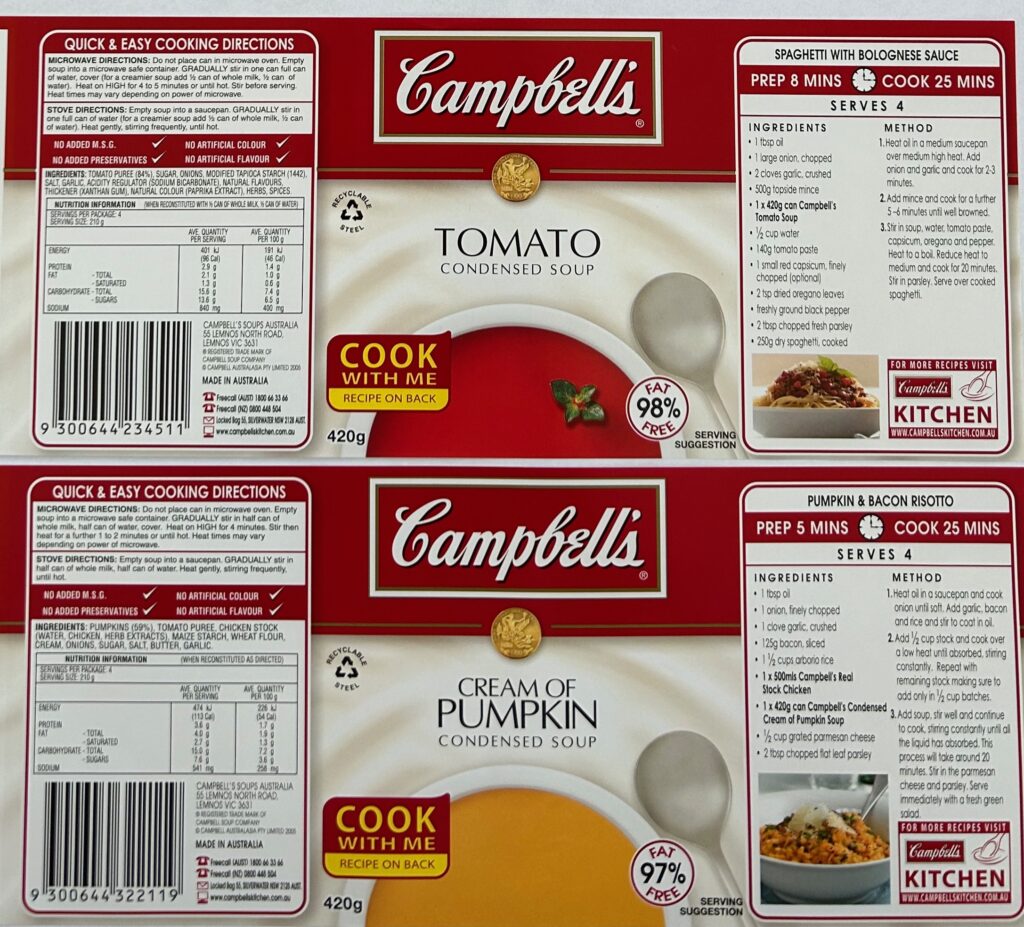
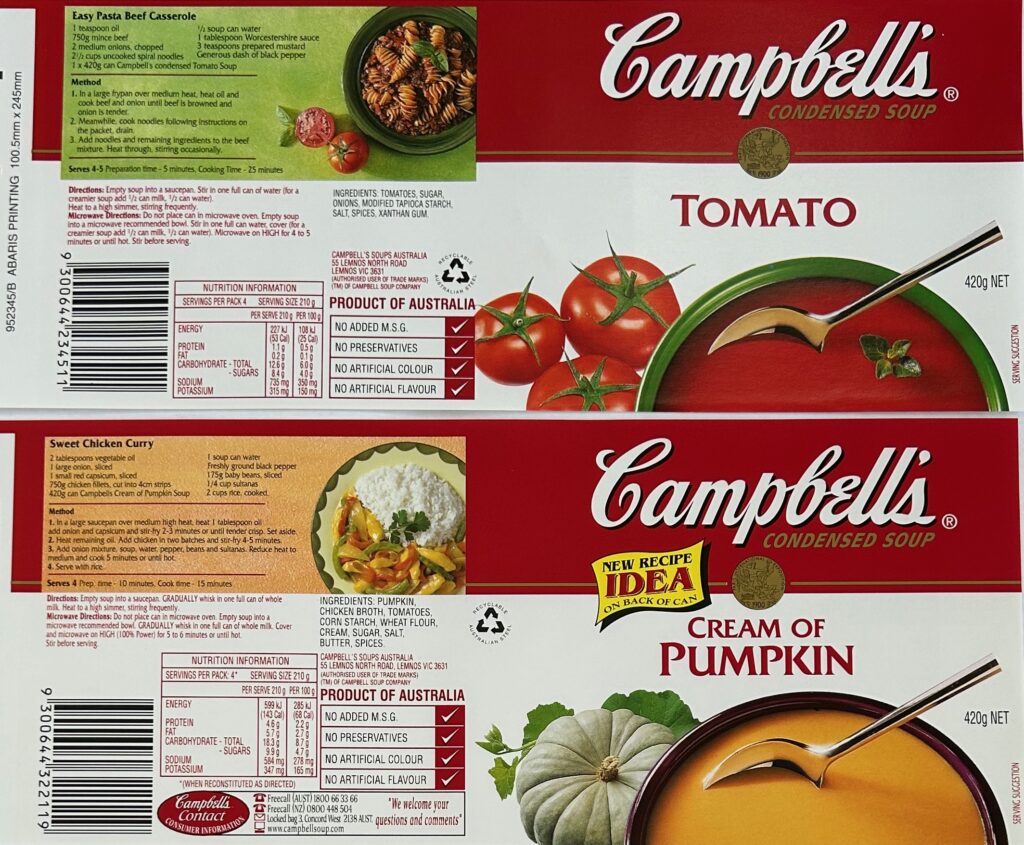
Aligned with a global directive to update packaging with the square lock-up logo across the Campbell’s range, I identified an opportunity to modernise the entire label and initiated an integrated marketing campaign to revitalise sales.
Consumer Insights
- Limited Recipe Rotation: Consumers typically relied on a small repertoire of 4-5 recipes.
- Usage in Recipes: Despite the decline in condensed soup consumption, 50% of Campbell’s Condensed Soup was still used in recipes.
Campaign Objectives
- Modernised Label Redesign: Incorporate the new Campbell’s logo into packaging to refresh brand image and align with global standards.
- Promote Recipe Usage: Introduce new recipes to encourage consumers to use Campbell’s Condensed Soup in a wider variety of dishes.
- Increase Purchase Frequency: Implement an in-store promotion where consumers could collect three labels from Campbell’s Condensed Soup cans to receive a free cookbook featuring innovative recipes using the product.
Integrated Campaign Strategy
- Packaging Redesign: Rolled out a modernised label design across all Campbell’s Condensed Soup variants to enhance shelf appeal and brand visibility.
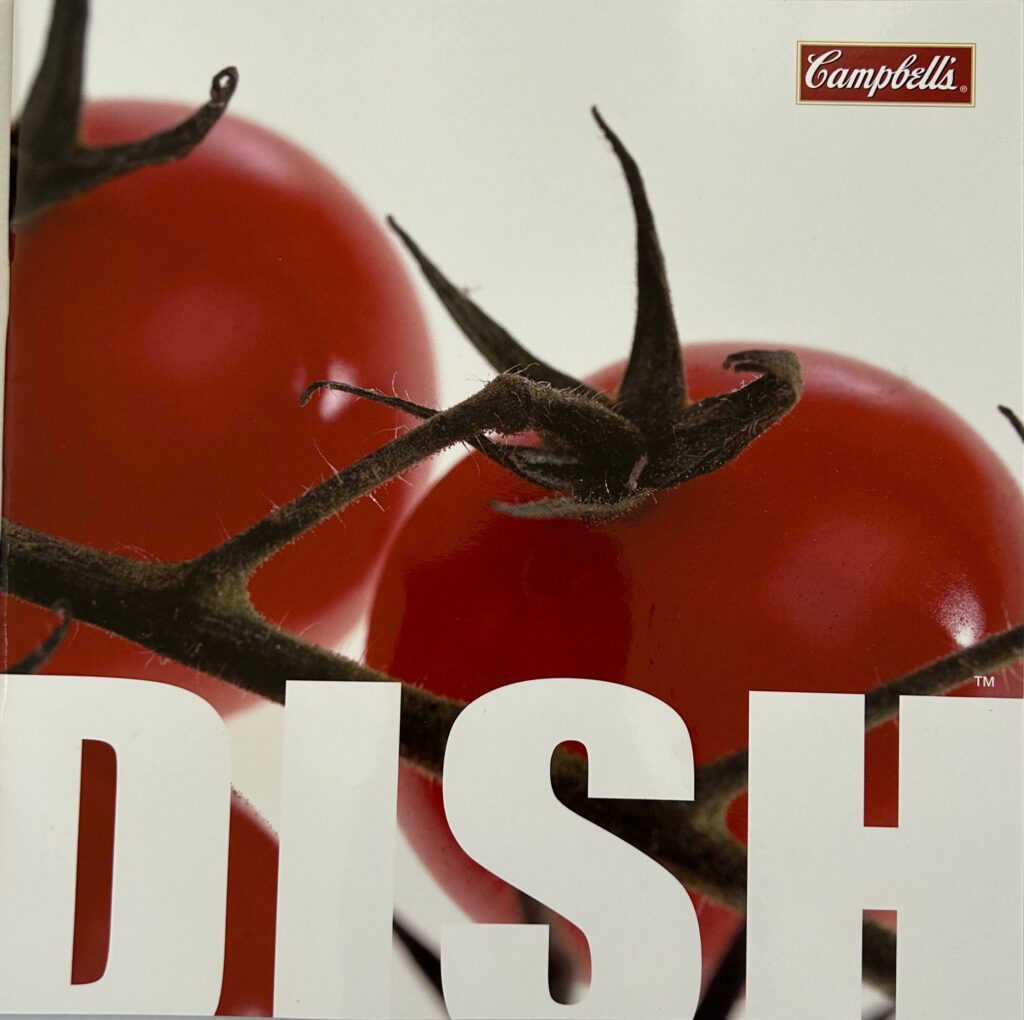
- Cookbook Creation: Developed a cookbook showcasing Australian favorite recipes using Campbell’s Condensed Soup, emphasising its versatility in everyday cooking.
- In-Store Promotion: Launched a promotional campaign in supermarkets where consumers were incentivised to purchase multiple units of soup to collect labels for the free cookbook, thus boosting sales and reinforcing usage occasions.
- Digital Component: Created a refreshed website to support the campaign, featuring recipe ideas, cooking tips, and interactive elements to engage consumers online.
Results and Recognition
The integrated campaign successfully reversed the brand’s decline:
- Sales Impact: Increased sales of Campbell’s Condensed Soup by promoting additional consumption occasions through recipes.
- Consumer Engagement: High participation in the in-store promotion, driving repeat purchases and customer loyalty.
- Recognition: Received a prestigious “Make a Difference” award for the comprehensive execution of the campaign, including the website, consumer engagement initiatives, and measurable business results.
Lessons Learned and Recommendations
- Consumer Insights: Leveraging consumer behavior insights (recipe repetition and soup usage) proved pivotal in designing effective marketing strategies.
- Integrated Approach: Integrating packaging redesign, cookbook creation, and in-store promotions maximised campaign impact and consumer engagement.
- Adaptability: Adapting to global branding mandates while addressing local market challenges ensured campaign relevance and effectiveness.
Conclusion
The Campbell’s Condensed Soup integrated marketing campaign of 2003 stands as a testament to strategic thinking, consumer-centric approach, and effective execution. By understanding consumer habits and aligning marketing initiatives with business objectives, the campaign not only revitalised the brand but also garnered company wide recognition for its innovation and impact.
Campbell’s Soup Label Design Before (Left) and After (Right)
Resulting Cookbook featuring 30 recipes gathered from consumers to showcase the simplicity of cooking with condensed soup.